








Asia Society
  • Policy & Politics
  • Arts & Culture
  • Business & Economics
  • Education & Learning
  • Countries & History
  • Style & Living
  • Events Calendar
China Boom Logo Center on china us relations
  • Viewbythread
  • Capitalism
  • Globalization
  • The Party
  • Crisis Management
Pre 1978 1978 1984 1985 1989 1990s 2000s Present

Emancipation

  • From Mao to Deng
  • Capitalism in the Countryside
  • Growing Out of the Plan
Gradient Line

“Reform and opening” started from the top with the seminal leadership transition from Mao to Deng. Deng Xiaoping heralded China’s boom in late 1978 when he called for experiments with “economic democracy” and “emancipation” from orthodox ideas. But the boom was not simply a top-down, state-orchestrated phenomenon. In fact, the biggest contribution of the state, especially in the first phase of growth, was to get out of the way. Farmers were liberated from collectives, sparking a wildfire of capitalism in the countryside. Urban markets and industry were freed to “grow out of the plan,” making profits on surplus production and creating powerful incentives for rapid growth.

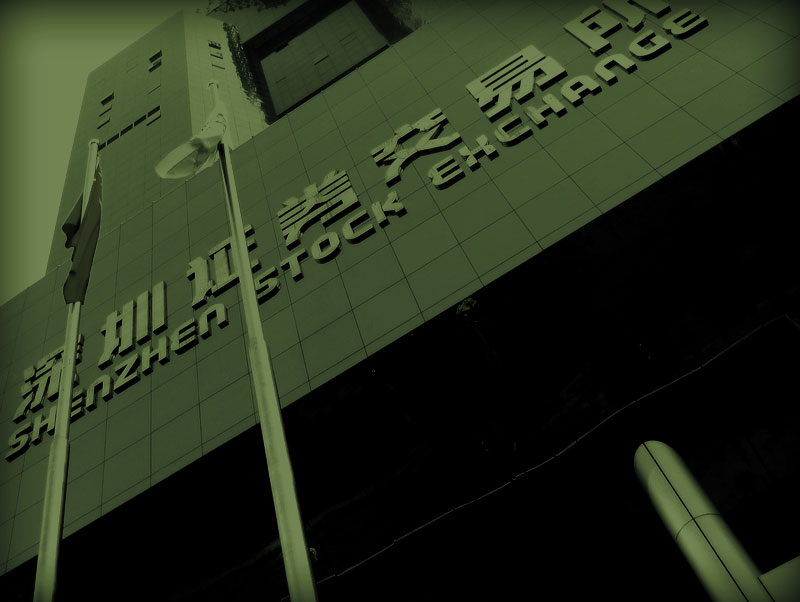
Shenzhen Was a Small Fishing Village Before

Period: Emancipation (1978-84)

Videosinthisperiod

Slideup
  • Reform Was Accompanied by an Open Door Policy

    Jin Canrong

  • Deng Xiaoping Was Modern China's First Modernizer

    Xu Xiaonian

  • Phasing Out The Planned Economy

    Barry Naughton

  • Chinese Were Enthusiastic About The New Beginning

    Yoichi Funabashi

  • If We Don't Do Anything, This Country is Ruined

    Philip P. Pan

  • Economics Was a Minor Aspect of Opening in 70s

    Winston Lord

  • Deng's Visit to The US Resulted in Capitalism

    Mao Yushi

  • The Resurgent Elite Legitimized Deng's Government

    Michael Anti

  • China's Development in Three Periods

    Li Cheng

  • The Legacy of Property Provides Stability

    Fan Jianchuan

  • Eating from One Rice Bowl

    Zhong Taiyin

  • Factory Managers Did Not Understand Business

    Thomas Rawski

  • Playing to The Provinces

    Susan Shirk

  • For 800 Million People, It Was a Huge Bang

    Deborah Davis

  • Beijing Back Then Was Like Pyongyang

    Carl E. Walter

  • The Birth of Private Workers, The Death of People’s Communes

    Bao Yujun

  • If China Was Poor,Tibet was Poorer

    Sun Yuying

  • Shenzhen Was a Small Fishing Village Before

    Zhou Renna

  • One Child Policy Stimulated Growth

    Michael Pettis

  • People Who Fall Behind Will Be Beaten

    Cai Guoqiang

  • Deng Understood That the World Had Changed

    Wu Jianmin

Slideup
White Bg
Meettheexpert

Zhou Renna

Zhou Renna is a sales executive at the Shenzhen Branch of China Pacific Insurance (Group) Co., Ltd. She has been working in the insurance industry since 1994.

Videotranscript
Caret

Click to expand

collapse transcript Closebigger

When I was young, I went to boarding school. And I went home once a week. My mother would give me 1 yuan every week as my living expenses. Now it is hard to imagine living on a budget of 4 yuan per month. But back then in 1979, no one could have ever imagined what China is like today. After the Third Plenary Session (of the 11th Central Committee of the CPC) in 1979, my hometown, Jiaxing City in Zhejiang Province, has changed so fast. And I could feel the changes intimately. Many of my relatives and former schoolfellows started their own businesses. Some started out by running a family business. In early 1980s, many new houses and buildings started to appear. And more people became rich. Of course there were some irregularities in the market, too, which did happen. The 80s witnessed a boom of small private businesses. But nobody was sure of what would happen next. I have to say that Deng Xiaoping made a really sagacious decision.  He chose Shenzhen, which was only a small fishing village neighboring Hong Kong,to build a special economic zone. The decision was wise, because even if the policy failed, the country wouldn’t have too much to lose. But if it succeeded, then Shenzhen would set a vital example for China's economy. And it did succeed. China is a policy-oriented state; with supporting policies Chinese people have more confidence. So after the central government acknowledged and praised Shenzhen's achievements, Chinese people became more encouraged to do business. 

Add New Comment

comments powered by Disqus
Cite this Source >>
“Shenzhen Was a Small Fishing Village Before | Zhou Renna | Emancipation | The China Boom Project.”
The China Boom Project.
The Asia Society Center on US-China Relations.
1 June 2010.
Web.
16 May 2012.
<http://chinaboom.asiasociety.org/period/emancipation/0/275>.
Map Sm

Map the interviews

Click on the map to see where inteviews took place

+
Map Threads Timeperiods Essays
Click map to browse videos by location.
Map Preview
  • Capitalism
  • Globalization
  • The Party
  • Crisis Management
  • Inheritance (Pre-1978)
  • Emancipation (1978-1984)
  • Reckoning (1985-1989)
  • Rebirth (1990s)
  • Overdrive (2000s)
  • Prospects
  • Mao's Failure, Deng's Success
  • China Boom: Rural China in the 1980s

©2010 The Asia Society | Center on U.S.-China Relations | 725 Park Avenue at 70th Street, NY, NY 10021