








Asia Society
  • Policy & Politics
  • Arts & Culture
  • Business & Economics
  • Education & Learning
  • Countries & History
  • Style & Living
  • Events Calendar
China Boom Logo Center on china us relations
  • Viewbythread
  • Capitalism
  • Globalization
  • The Party
  • Crisis Management
Pre 1978 1978 1984 1985 1989 1990s 2000s Present

Inheritance

  • Tradition's Legacy
  • Socialist Foundations
  • Revolution to Reform
Gradient Line

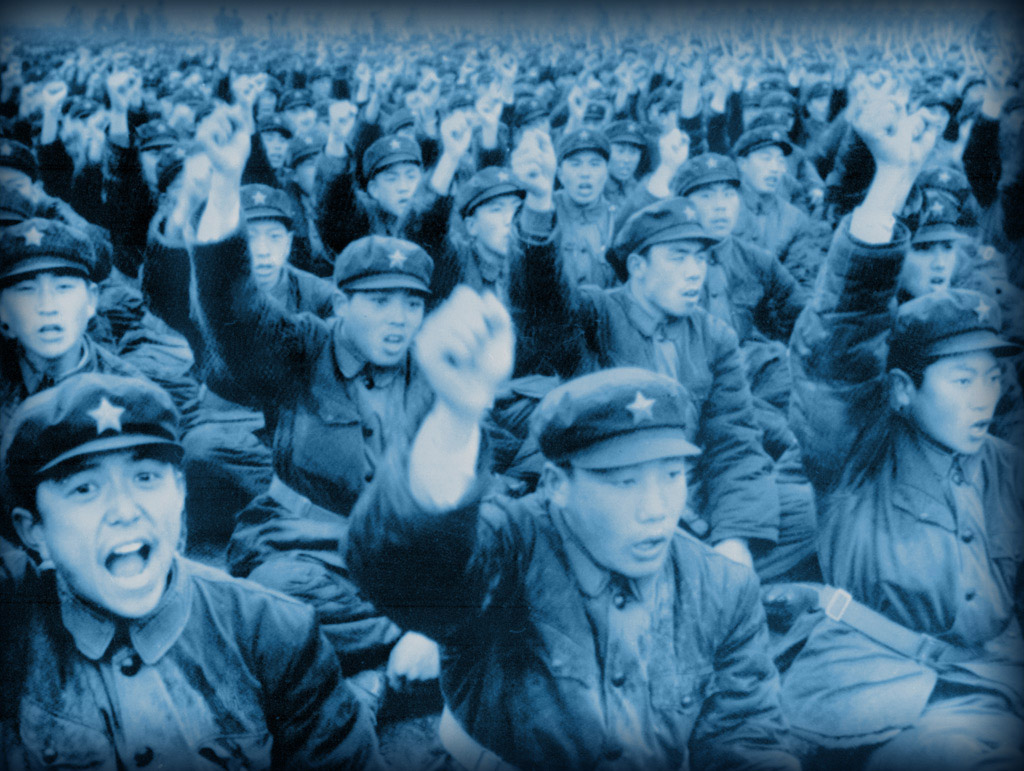
The roots of China’s recent boom extend deep into its imperial and communist past. But tradition’s legacy is a complicated one. To achieve modern development, China had to throw off the “yoke” of traditional society. Yet the long traditions of centralized government administration, kin-based entrepreneurism, and value placed on education and diligence prepared the Chinese well for capitalism. Despite catastrophes like the Great Leap Forward and the famine in its wake, Mao Zedong’s nation building efforts between the founding of the PRC in 1949 and the unleashing of the Cultural Revolution in 1966 laid socialist foundations for the subsequent boom. Even the disastrous, decade-long Great Proletarian Cultural Revolution contributed to the boom: By eroding public support for radical politics, the ground was cleared for a transition from revolution to reform—for new policies that were gradualist, internationalist and capitalist.

The Cultural Revolution Created Pent-Up Desire

Period: Inheritance (Pre-1978)

Videosinthisperiod

Slideup
  • It's All About the Rural Household

    Deborah Davis

  • Reform Could Not Have Happened Without Mao

    Cui Zhiyuan

  • Gender Empowerment in China is a Big Advantage

    Pallavi Aiyar

  • China’s Leaders Embraced Reform to Stay In Power

    Philip P. Pan

  • Cultural Revolution Raised Mass Support for Reform

    Wang Yong

  • The Cultural Revolution Was Devastating

    Zhang Jingjing

  • China's Commercial Spirit Has Not Been Lost

    David Wei

  • China Was Already Very Strong Before the Reforms

    Jin Canrong

  • Land Reform Was a Necessary Evil

    Chen Ping

  • The Cultural Revolution Broke All Patterns of Restraint

    Robert Oxnam

  • The Cultural Revolution

    Akio Takahara

  • The China Boom Began with Nixon

    Mei Xinyu

  • The Cultural Revolution Created Pent-Up Desire

    Steve Chapman

  • China’s Growth is Like a Slingshot

    Trevor Houser

  • An Opportunity to Question the Whole Existing System

    Luo Yan

Slideup
White Bg
Meettheexpert

Steve Chapman

Group Vice President of China & Russia, Cummins Inc.

Steve Chapman has been group vice president of China & Russia at Cummins Inc. since 2009. Mr. Chapman serves as group vice president of Emerging Markets and Businesses of Cummins India Ltd. He served as group vice president of Emerging Markets & Businesses at Cummins Inc. since May 2005 until 2009. Mr. Chapman joined Cummins Inc. in 1985, served as its vice president, International from 2000 to 2005; president, International Distributor Business from 2002 to 2005; vice president, Southeast Asia and China from 1996 to 2000; managing director, Southeast Asia and China from 1989 to 1996; director, Asian Markets (Japan & Korea) from 1987 to 1989; director, International Business Development from 1986 to 1987; and manager, International Business Development from 1985 to 1986. He served as Operations Rep. (China) from 1981 to 1983 and Manager (Taiwan) from 1979 to 1981 of Green Giant. He has been Director of Cooper Tire & Rubber Co. since 2006 and Cummins Westport Inc. since September 20, 2002. Mr. Chapman served as non-executive director of Cummins India Ltd. from 1992 to 2009. He served as an additional director at KPIT Cummins Infosystems Ltd. from 2005 to 2008. Mr. Chapman received an MPPM Management from Yale University in 1985 and a BA degree in Asian Studies/Political Science from St. Olaf College.

Videotranscript
Caret

Click to expand

collapse transcript Closebigger

In our company for example, we had a chairman here in 1977, shortly after the cultural revolution. And I was here in 1980s. So uh, there was a quick desire for change. I think the people are really sort of smart. You know, you go to all these factories and there was at least one or two people who really knew what they were doing. So the college education was devastated during the cultural revolution, but there still were people. Every factory I went to there was kinda one person who really knew what was going on and generally directed the technology in such a manner that you know, this person knew how to install the equipment, that person knew how to get quality out of it. You had the leadership and you have the workers, and you had one or two people at the plant who were just excited about technology and really wanted to make it work. And I found it very invigorating. If I look back, my plant in Hangzhou had one guy, the one in Guangxi or Nanning had two, Shanghai had a bunch. They were ready to produce, ready to do good quality,and nothing was gonna stop them. And it was really exciting attitude at the time. And that was in 81, 83. And then you walk around the streets and at that time it was the situation that you couldn't just leave the State-owned enterprises, they had your dang'an or your file and you couldn't go, you're stuck. Yet, there was a pent-up desire. I wanna go to shanghai, I wanna do this, I wanna do that.

Add New Comment

comments powered by Disqus
Cite this Source >>
“The Cultural Revolution Created Pent-Up Desire | Steve Chapman | Inheritance | The China Boom Project.”
The China Boom Project.
The Asia Society Center on US-China Relations.
1 June 2010.
Web.
16 May 2012.
<http://chinaboom.asiasociety.org/period/inheritance/0/263>.
Map Sm

Map the interviews

Click on the map to see where inteviews took place

+
Map Threads Timeperiods Essays
Click map to browse videos by location.
Map Preview
  • Capitalism
  • Globalization
  • The Party
  • Crisis Management
  • Inheritance (Pre-1978)
  • Emancipation (1978-1984)
  • Reckoning (1985-1989)
  • Rebirth (1990s)
  • Overdrive (2000s)
  • Prospects
  • Mao's Failure, Deng's Success
  • China Boom: Rural China in the 1980s

©2010 The Asia Society | Center on U.S.-China Relations | 725 Park Avenue at 70th Street, NY, NY 10021