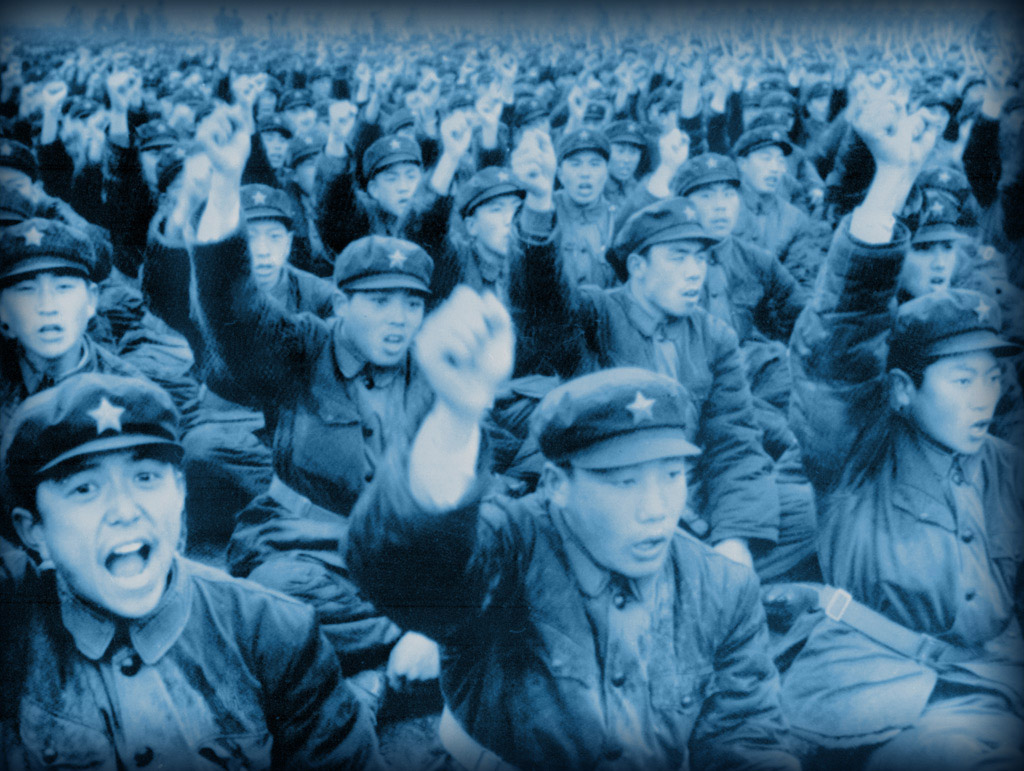









The roots of China’s recent boom extend deep into its imperial and communist past. But tradition’s legacy is a complicated one. To achieve modern development, China had to throw off the “yoke” of traditional society. Yet the long traditions of centralized government administration, kin-based entrepreneurism, and value placed on education and diligence prepared the Chinese well for capitalism. Despite catastrophes like the Great Leap Forward and the famine in its wake, Mao Zedong’s nation building efforts between the founding of the PRC in 1949 and the unleashing of the Cultural Revolution in 1966 laid socialist foundations for the subsequent boom. Even the disastrous, decade-long Great Proletarian Cultural Revolution contributed to the boom: By eroding public support for radical politics, the ground was cleared for a transition from revolution to reform—for new policies that were gradualist, internationalist and capitalist.
The China Boom Began with Nixon
Period:
Inheritance (Pre-1978) | Revolution to Reform
Mei Xinyu (梅新育), born in 1968 in Hubei province, has worked for the Chinese Academy of International Trade and Economic Cooperation in the Ministry of Commerce since 2002. He studied mechanical engineering and design at the Wuhan University of Technology from 1985 to 1989. After graduation, Mei worked in Wuhan's mechanical products quality supervision station. Between 1993 and 1996, he pursued graduate studies in international economics at Wuhan University, followed by a year working at the People's Bank of China. In 1997, he began Ph.D. studies of international economics in Wuhan University. During his post doctorate studies from 2000 and 2003, Mei worked at the Research Center for Foreign Trade in the Beijing Foreign Economic and Trade Commission and the Chinese Academy of International Trade and Economic Cooperation in the Ministry of Commerce.
The key turning point of China's economic boom is President Nixon's 1972 official visit to China. That was a major turning point. Why? For two reasons. Firstly, before Nixon's visit, the U.S. had upheld a strict and harsh economic embargo against China. This economic embargo didn't pull down China. Instead China gained its autonomy, established a relatively good industrial structure and greatly reduced the rate of illiteracy. Under this historical context, Nixon's visit acknowledged China's efforts and achievements in building its economic and industrial structure. In addition, during Nixon's visit, the Shanghai Communique was issued. It completely lifted the U.S. trade embargo against China and acknowledged China's international status and entrance into the mainstream international market. You should notice that this is an equalized international status. Before the establishment of the People’s Republic of China, this country didn't have an equal status to enter the international market. China's achievement in economy, industrial and human capital building has allowed it to obtain improved status in the international market. That's the reason why I consider 1972 as a turning point for China's economy. I think the main reason for the economic boom is China has a strong government and ruling party, which has maintained a stable social order as a basic condition of long and continuous economic development. Due to this strong government and ruling party, China has gained a relatively equal international status in terms of politics, economy and military. If a country is not accepted as an economically competitive country in the international market there won't be any economic development.
Add New Comment
comments powered by Disqus